Tennis Parenting: Realities, Hardships, and the Ultimate Goal
The journey through junior tennis is rarely predictable. It is filled with peaks and valleys, breakthroughs and setbacks, confidence and doubt, excitement and frustration—and everything in between. For a young athlete who is simultaneously developing physically, emotionally, socially, and academically, the demands can become overwhelming. They are learning how to compete while also figuring out who they are, managing school, friendships, expectations, failure, pressure, and the increasingly complex responsibilities that come with growing up. For parents, this can be equally difficult. One of the most challenging parts of supporting a competitive athlete is learning that the instinct to protect your child is not always the same as what your child needs from you.
The Parent’s Role Has to Evolve
As children progress through competitive tennis, the parenting role has to change. At younger ages, parents naturally provide more structure, supervision, instruction, and protection. As athletes mature, the emphasis should gradually shift toward independence, ownership, accountability, emotional regulation, and decision-making. You cannot parent a 16-year-old competitive athlete the same way you parent a 9-year-old beginning tennis. Age, maturity, personality, competitive level, goals, and circumstances all matter. There is no universal formula. But generally, the progression should move from:
Protect → Guide → Support → Empower → Let Go
The objective isn’t to become less involved. It is to become involved differently. As the athlete gets older, parents should gradually transfer responsibility rather than continuing to carry it themselves. The long-term goal is not to have a player who needs a parent to organize, motivate, advocate, communicate, and solve problems for them.
The goal is to develop an athlete who can eventually do those things for themselves.
The Coach-Parent Dynamic
One of the most important distinctions in a competitive tennis environment is understanding who owns what. Parents are responsible for parenting their child. Coaches are responsible for coaching the athlete. That means the coach—not the parent—is responsible for the tennis environment: technical development, tactical development, training standards, competitive preparation, practice expectations, tennis-related accountability, and the player’s development as a competitor. Parents should absolutely communicate with the coach, ask appropriate questions, and raise legitimate concerns. A strong coach-parent relationship requires communication and mutual respect. But communication does not mean shared authority over every coaching decision.
When the athlete is on the tennis court, the coach needs to be the authority.
The player should not have to look into the stands to determine whether Mom or Dad agrees with what the coach is saying. They should not receive one message from the coach and a contradictory message from a parent five minutes later. That creates confusion. And confusion makes it much harder for an athlete to fully trust the process.
Coach-Athlete Trust Is Essential
At the center of every strong competitive tennis environment is trust between the athlete and the coach.
A player has to believe that their coach has their best interests at heart, understands their development, sees the bigger picture, and is willing to tell them what they need to hear—not simply what they want to hear. That trust is surely earned over time. The coach will sometimes challenge the athlete. They will correct them. They will hold them accountable. They will have difficult conversations. They will identify weaknesses the athlete doesn’t want to acknowledge. They will push them beyond their comfort zone. Not all of that will feel good. But the athlete needs to understand that being challenged is not the same thing as being criticized personally.
A strong coach-athlete relationship allows the player to believe:
My coach will tell me the truth.
My coach will hold me accountable.
My coach believes I am capable of more.
My coach isn’t going to abandon me when things get difficult.
My coach is pushing me because they believe I can handle it.
That trust is what allows a coach to truly coach. Without it, every correction can feel like criticism, every difficult conversation can feel personal, and every setback can create doubt about the relationship. With it, the athlete can be challenged without becoming defensive, corrected without losing confidence, and pushed without feeling threatened.
Parents Have a Responsibility to Protect That Trust
Parents play a major role in establishing and maintaining the coach-athlete relationship. If a player hears one message from the coach and a completely different message from a parent, the athlete can quickly become caught between the two. That is a position they should never be placed in. If there is a disagreement with the coach, take it to the coach—not to the player. Questioning coaching decisions in front of the athlete, contradicting instructions, explaining away accountability, telling the player what the coach “really meant,” or allowing the player to circumvent the coach can unintentionally undermine the relationship. And once an athlete learns that difficult coaching can be avoided by going to Mom or Dad, they have learned something that can be very difficult to undo.
They have learned that accountability is negotiable.
They have learned that discomfort can be escaped.
And they have learned that there is another authority they can appeal to when they don’t like the answer. That is not developing independence. That is developing dependence.
Parents don’t have to agree with every coaching decision. Coaches won’t always get everything right. Healthy disagreement and professional communication are appropriate. But those conversations should happen adult-to-adult, away from the athlete whenever possible. The athlete should never feel like they have to choose between their parents and their coach.
Respect the Coach’s Authority
The coach does not need to be infallible. But the coach needs to be respected. Within the tennis environment, the coach should have a very high level of authority over tennis-related decisions. The coach establishes the training standards. The coach provides the tennis instruction. The coach sets expectations. The coach delivers tennis-related accountability. The coach determines what the athlete needs to work on. The coach challenges the athlete to improve. And the athlete needs to know that when they step onto the court, their coach has the authority to coach them. That clarity is incredibly important. A player should not be wondering whether they need to follow the coach’s instruction or their parent’s opinion. They should know:
When I am on the court, I trust my coach. I listen. I compete. I learn. I respond.
That relationship allows the athlete to focus on the actual work instead of navigating competing adult expectations.
Don’t Rescue What Tennis Is Supposed to Teach
One of the most difficult areas for parents is rescuing. In everyday life, parents naturally try to protect their children from pain, disappointment, embarrassment, failure, and suffering. That instinct is healthy and understandable. But within the safe boundaries of practice and competition, athletes need opportunities to experience discomfort. They need to lose. They need to struggle. They need to be frustrated. They need to make poor decisions and experience consequences. They need to sit with disappointment, regulate their emotions, and figure out what to do next. If a player becomes upset, cries after a match, loses a difficult point, or experiences a disappointing result, the immediate parental instinct may be to intervene—to comfort, explain, defend, or solve the problem. Before stepping in, ask:
“Am I helping my child, or am I preventing my child from learning how to handle something difficult?”
There is a significant difference. Competition is one of the safest places for a young person to learn how to experience adversity because, despite how emotionally significant it may feel, a tennis match is not a crisis.
A bad loss isn’t a life emergency.
A disappointing performance isn’t a catastrophe.
A tough coaching conversation isn’t something that needs to be immediately fixed.
Sometimes the most productive thing a parent can do is simply allow the athlete to experience it.
The Athlete Has to Own the Experience
The long-term objective is to develop an athlete who can say:
I can be disappointed and still be okay.
I can lose and recover.
I can be uncomfortable without someone fixing it.
I can make a mistake and take responsibility.
I can receive difficult feedback without falling apart.
I can solve problems on my own.
That is self-trust.
Every time an athlete navigates something difficult without being rescued, they collect evidence that they are capable of handling difficult things. That evidence becomes confidence.
The Ultimate Goal
Junior tennis isn’t simply about producing better tennis players. It is an opportunity to develop young people who can handle pressure, adversity, accountability, independence, disappointment, responsibility, criticism, and success. There will be losses that hurt. There will be coaching that challenges them. There will be moments when they cry, get angry, want to quit, question themselves, or wonder whether the sacrifice is worth it. Those moments aren’t necessarily problems to eliminate.
Many of them are opportunities to develop the person underneath the tennis player. The parent’s job isn’t to make the journey painless. The coach’s job isn’t to make the athlete comfortable. And the athlete’s job isn’t to avoid difficulty.
The job of everyone involved is to help the athlete become capable of handling difficulty.
Trust the process. Maintain perspective. Respect the roles. Protect the coach-athlete relationship. Communicate directly. Support the athlete without rescuing them. Give them more responsibility as they mature. And above all, remember:
The goal isn’t to create an athlete who needs you forever. The goal is to develop an athlete who trusts their coach, takes ownership of their development, and eventually trusts themselves.
Common Discussions
Specialization in tennis is one of the top things I am asked about from ages 8-12 or so. Let’s approach it from a skill point of view. Tennis is an anticipatory sport, which means that you have to be able to use visual cues to Specialization in tennis is one of the most common questions I get, especially for players ages 8–12. I think the conversation is better approached from a skill-development perspective rather than simply asking, “Should my child specialize?”
Tennis is an anticipatory sport. Players must use visual and contextual cues—body position, racket preparation, contact point, ball trajectory, and patterns—to anticipate what is going to happen before it happens. Many other sports develop these same perceptual, decision-making, movement, and reaction skills, which is why participation in other sports can complement tennis development.
There is absolutely value in developing tennis-specific skills early. Players need quality repetition, technical instruction, movement, tactical understanding, and competition. But early tennis development and early specialization are not the same thing. A young athlete can take tennis seriously, train consistently, compete, and develop an excellent foundation while still participating in other sports.
There is also an important piece that sometimes gets overlooked: the player has to want it. Parents and coaches can create opportunities, structure, and accountability, but we cannot manufacture passion. Allowing young athletes to experience different sports can help them discover what they truly enjoy and, in many cases, can actually strengthen their desire to pursue tennis.
Other sports also develop important intrapersonal and interpersonal skills—resilience, communication, leadership, adaptability, teamwork, handling adversity, and learning to respond to different coaching environments. Those experiences can become incredibly valuable later in an individual sport like tennis, where players must manage themselves, make decisions, solve problems, and take ownership.
One of the most interesting comparisons is Tiger Woods and Roger Federer. Tiger specialized in golf extremely early, while Federer played multiple sports before focusing primarily on tennis as a teenager. Both became legends. Their stories don’t prove that one pathway is better. They demonstrate that there is no single formula for developing an elite athlete.
When deciding how much a young player should specialize, I think we should ask:
Is the player developing the skills necessary for tennis?
Do they genuinely enjoy tennis?
Are they motivated to improve?
Are they developing athletic abilities beyond tennis?
Are they physically and emotionally handling the training load?
Is specialization being driven by the player or primarily by the adults?
Are their commitment, maturity, performance, and goals naturally moving them toward greater specialization?
Ultimately, specialization should be a progression, not a deadline. The goal at ages 8–12 shouldn’t simply be to create the most specialized tennis player. It should be to develop a complete athlete, skilled tennis player, competitor, problem solver, and young person who genuinely wants to see how good they can become. Don’t confuse doing more tennis with developing better players. able to read and react before things happen. There are other sports that require this same skill and therefore allows you to cross train. Skill set wise tennis favors early development for sure, but sampling other sports for a while and growing passion for tennis is important. So, part of the equation with choosing tennis full time needs to be the players desire to do so, allowing them to try different things, and simultaneously making sure they are hitting the parameters in tennis needed to be successful. The most interesting debate that I have heard is Tiger vs Federer. Tiger specialized from birth, and Federer played many sports till around 14. Both are legends. From my point of view there are a number of intrapersonal and interpersonal skills that you gain from other sports and having a more generalized approach, versus specializing too early, makes a lot of sense.
I always say you cannot burn out until you have caught fire. If they love playing, let them play. As parents you want to dangle the carrot in front of I always say, “You cannot burn out until you have caught fire.”
If a young player genuinely loves playing tennis, that passion should not automatically be viewed as a problem. In fact, enthusiasm, curiosity, and a desire to play are exactly what we want to cultivate. Burnout is rarely just about playing a lot. It is more often associated with a combination of excessive demands, repetition without purpose, lack of recovery, pressure, limited autonomy, and—most importantly—a loss of enjoyment. That means parents and coaches have a responsibility to protect the joy of the game while still creating an environment that challenges the player.
As parents, think of your role as helping keep the carrot in front of them—creating reasons to be excited about tennis, setting appropriate boundaries, providing opportunities, and allowing the player to maintain ownership of their journey. The parent is also the manager of the overall environment, including scheduling, total commitments, recovery, school, sleep, and making sure the player’s life isn’t consumed by tennis. The coach’s responsibility is different. The coach manages the tennis. That means developing the training plan, determining what the player needs technically, tactically, physically, and mentally, and continually adjusting the program to keep the athlete challenged and engaged. The solution isn’t necessarily to play less. The goal is to make the time they spend in tennis meaningful, purposeful, varied, and enjoyable.
Keep them stimulated.
Keep them challenged.
Give them something to look forward to.
Allow them to have ownership.
And most importantly:
Keep it fresh. Keep it fun. Keep the fire burning.
The influence of UTR and WTN in junior tennis has become a significant issue, particularly when rankings and ratings begin to overshadow development, competition, and the actual player.
UTR and WTN can provide useful information. They can offer a general indication of competitive level, help coaches identify appropriate competition, and give players and families another data point to evaluate progress. But they are metrics—not identities.
I hear players say things like, “I’m a 4.32 UTR.” When a number becomes part of how a young athlete defines themselves, we have to ask whether the metric is helping development or creating unnecessary psychological baggage. A rating is based on a player’s results and the methodology behind that rating. It does not fully capture their potential, work ethic, technical development, competitive maturity, physical development, or where they may be six months from now.
Especially with younger and developing players, relatively small differences in rating can represent very different things. A change in level might come from fundamental developmental milestones—a better serve, improved movement, greater consistency, better decision-making, or simply learning how to compete more effectively. A developing player shouldn’t feel like they are carrying a permanent label.
Parents can unintentionally make this worse. If your child is a 5 and sees they are playing a 6, and everyone immediately assumes, “They’re probably going to lose,” the match can be mentally decided before the first ball is struck. That mindset is incredibly counterproductive. The rating should tell you who the opponent is on paper—not what is going to happen on the court. The questions should be:
What does this player do well?
What can I learn from playing them?
What is my game plan?
What are my goals for this match?
Can I compete for every point?
What do I need to execute today?
At the developmental level, the focus should be on building the player, not protecting or chasing a number. Parents and coaches should also be conscious of the culture they create around ratings. If every tournament, practice, conversation, and car ride revolves around UTR or WTN, the number can quickly become more important than the process.
Be aware of the rating. Use it as information. Don’t let it become the culture.
Tennis Parenting Survivors
A couple messages from families I have worked with for many years. All securing their college tennis dreams! With dedication, trust, and commitment, everyone will reach their goals! Everyone has their own tough journey and ups and downs. In the end, its all worth it!
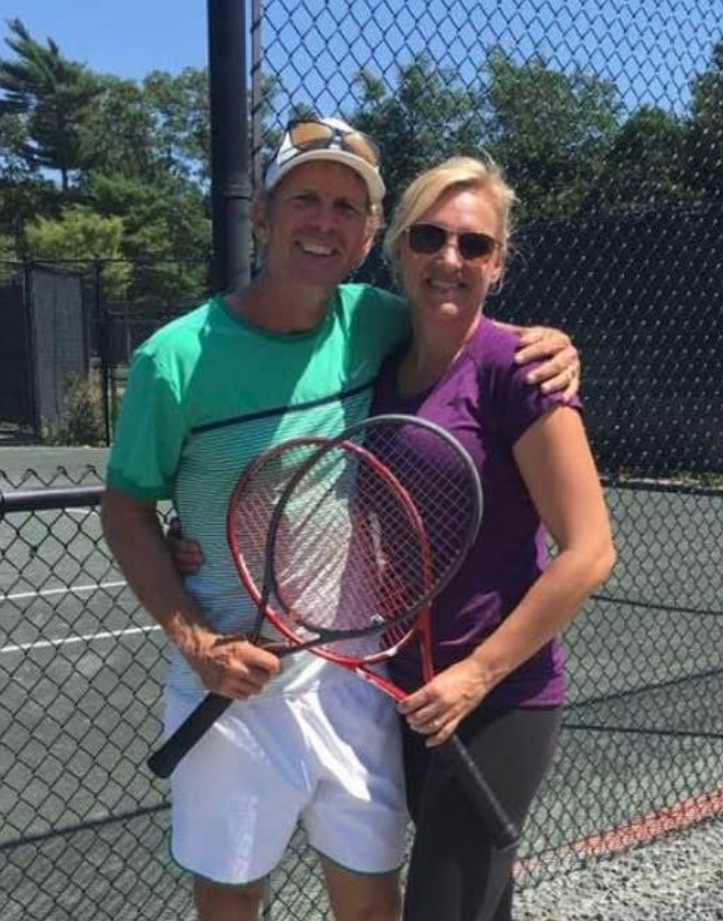
Chris and Sue Shannon
Aly, Summer, and Kylie – All D1 College Tennis
We have known Coach John for 7 years. He has worked with all 3 of our girls, most notably Aly who he coached to a top 10 National Ranking, secured a Division One scholarship to SEC powerhouse University of Tennessee and win multiple Gold, Silver and Bronze balls.
John is a great technical coach as well as strategist but his biggest attribute is his relations with his students and the trust his players have in his opinions and teachings.
Tennis can be very stressful for players and parents. John always brings a sense of calm and perspective that is critical when communicating before, during and after tournaments as well as practice.

Colin Santos
Harper Santos
College of Charleston
Coach John’s commitment to our daughter and our family was unwavering as he helped us navigate the emotional stress of competitive junior tennis. He stood by us during the challenging teenage years, helping our family through the emotional highs and lows and was always there through thick and thin—ultimately guiding her to earn a D1 college scholarship.
Tennis Parenting Hot Topics
“Will my kid be great?”
I hear this question a lot with younger players and parents just starting out. It’s a really tough one to answer because there are so many factors involved. I’m not a huge fan of the word “potential” and prefer the word “ability” because you can answer the question easier. Does he/she have potential versus Does he/she have ability? Even in reading that back you can see that one is based on the present and is right in front of us and the other is set in the future and based on “if’s”. I just think when it comes to fortune telling, it’s impossible. When it comes to looking at the statistics surrounding youth sports, we can somewhat find some parameters for being successful. If they love tennis, work hard, and enjoy competing, they are certainly going to have a great start. If they are lazy, don’t listen, don’t love what they do, then certainly you are in for disaster. We do know is that if the player has played other sports alongside tennis, they’re most likely going to have an advantage. The science behind this is pretty straightforward. Sampling sports and cross training can aid in learning skills that overlap which can help young athletes pick up things faster, especially with anticipatory sports like tennis. Genetics do play a role as well. Hopefully you’re not saying “oh no” right now. There is also around a 50% success rate of a player reaching a high level if their parents were high-level athletes, too. Which to me just means they understand the journey better and don’t create or add as many roadblocks. My advice is pretty simple. Give your kids an opportunity to be successful by putting them in an environment to thrive, breed their passion for all sports and competitions, and let them fall in love with what they gravitate towards. The junior tennis journey is tough enough, so loving it has to be a prerequisite!
“They don’t want us to watch at tournaments…”
This comes up in every single player’s journey. At some point, they don’t want you watching them and can even get very adamant that you are the root cause of their anxiousness and or high stress levels. The hard part is there could be some truth to this, and with a coach present, you should be able to come up with great boundaries and plans for everybody to feel comfortable at a tournament. Most of the time, players feel judged by their parents, and that can be a catalyst for overstimulation and anxiety. I usually tend to err on the side of parents can do whatever they would like to do, and the child doesn’t have much say in it because they are not the ones paying the bills or sacrificing the time and effort to get them to tournaments. So if a player has an irrational take on what’s going on, I try to nip it in the bud pretty quickly and tell the parents that they can go watch as much as they want. If something is happening where parents are causing too much stress and having unnecessary conversations before and after matches, then we just need to shut those down. Moral of the story – go watch them, get to a point where they enjoy having you there and you enjoy watching them play whether they win, lose, or play great, or have a meltdown.
College tennis-Can they do it?
The college tennis question to me is a resounding yes they can. What college, what level, and what the journey looks like could be a big variable. Let’s start with the big dream. If we work backwards, an 18-year-old men’s tennis player entering at the D1 level needs to be around a 13 UTR, and women’s around a 10. These numbers I’m talking about are for a top 40 D1 school. There are a lot of D1 schools that even a D2 or D3 school would easily be able to beat, and that’s probably an entirely different topic. So going back to working backwards at 18 years old, to be between a 12 and 13 UTR, that means as a sophomore, you need to be around a 10 in the men’s and 8 1/2 to 9 UTR in women’s. So if we go back even more when you’re in eighth grade, you need to be between a 7 to 8 UTR in women’s and an 8 to 9 UTR in men’s. From my experience, the maximum UTR point jump that somebody can make after reaching a 7 UTR is about one full point a year. Remember what I said, though, everybody’s journey and variables could be quite different. Somebody that decides to homeschool or has homeschooled the whole time, has a time advantage. Players that have injuries or are later starters could have some setbacks, but also might have a more fresh perspective on the grind. There can be many different factors that play into what it will look like before somebody is signing their national letter of intent to go to a school. We certainly do know that if somebody wants to play college tennis, there is a school for everybody. I think that everybody sets their sights on the big dream schools, which is completely normal, but there are thousands of colleges with great teams that provide great experiences.
What to say, When to say it…
The best thing you can do is let your kids come to you and bring up topics in relation to tennis. There are certainly times you can be casual about it and have a nice conversation, but you do have to be careful. Age and level is a big factor too. Often times there is a heavy mismatch when it comes to the energy of your child and the energy you are bringing. For example: They come off a match and they are tired, maybe beat up a bit by the match, and as parents we want to come in immediately and talk and have a higher energy level. Of course they will withdraw from the conversation and undoubtedly the parent gets upset. Another example is quite a bit simpler to understand which is you have not seen your child all day long because they have been at practice from 7 till 5pm and you were at work, so when you see them you want to talk and know what’s going on with their day etc. Again this energy almost always is not matched. They are exhausted. They are teenagers (they don’t want to talk to you). They are decompressing. Let them! Athletes do need time to decompress. Learning to separate “normal kid” and “tennis player” is something I always encourage because the boundaries are a little bit different.
Wondering how practice went…
Most of the time parents have an expectation and are waiting for that expectation to be met from the feedback of the player. “I played great, against a great player, all the coaches loved me, nothing went wrong.” Yeah that isn’t going to happen. Who they practiced against, what the practice was, what coach they were with, did they win or lose, and on and on…DOES NOT MATTER. So stop thinking that it does. However, I will give you some leniency on one thing though. The program, and the coaches need to be good. If they are consistently around poor coaching and poor players that do not have the same goals etc, then you need to make some adjustments. What you want to know, without having to ask, is that they received tough quality coaching, they were pushed and educated, and if hey worked hard. Great questions if you need to know something or just really need to talk would be: Did you work hard today? What did you learn today? What is your coach’s favorite Starbucks order so I can grab one for him? (jk) And just remember, these conversations are almost all pre-teen years because teenagers don’t want to talk to you at all. Once they are in their search for identity and independence their headphones are in before they even get to the car! If you have questions or concerns talk to the coaches directly. It will save your sanity.
Tournaments and how to handle the stress…
Tournament stress is real. For everyone. As parents we want to watch our kids play, and simultaneously see the product that we have paid to produce. If the product and the expectations are not close then emotions can get high. This is the same for the players as well. Spending weeks training hard, tough practices, playing good or bad, and their personal expectations are on the forefront of their mind. Let alone them managing yours. All this is happening inside everyone’s heads, and usually in the car ride to the site and then comes the aftermath after the matches. “Im hoping you did a lot of work on your serve last week so you don’t double fault like last time”. These comments come out a lot. Make sure that your conversations are productive and ask yourself before any comment “Is this going to help?” Specific results are not what careers are built on. Careers are built on a consistent tournament play and results over time. Try to always look at the macro of everything and stay big picture. My greatest recommendation is that you travel with a coach as often as possible or have them take the players. Although a more epensive route, the value far exceeds the price.
Just because something is true, doesn’t mean its useful…
Be careful pointing out the obvious. “You double faulted a lot” does not help. Players know. Please refer to the coaches on anything tennis related and vent to them. A lot of times there is a need to vent our frustrations and the only one around is your child. Try to stick to things that are character based. Did they compete and fight well, did they act professionally, and did they represent your family and coaches respectfully? Those things are not tennis. They are foundational and about the character traits of the player, which of course is directly related to you as parents.
Teenage years…
As players enter their teenage years, it can become challenging for parents to support them. The attitude changes alone can be rough. Teenagers are navigating the world of tennis while also trying to establish their own independence and identity. Their need for personal space and emotional growth can also be difficult for coaches to manage. The key is to separate tennis from family dynamics and utilize the coaching staff to facilitate communication and outreach. This will help alleviate the strain on both parents and coaches, allowing them to support the players in the best way possible. Through coaching over thousands of teenagers, I understand the unique challenges and dynamics of teenage athletes. It can be head scratching at best. I’m happy to offer guidance and support every step of the way.
Coaching Culture vs Home Culture
This is an interesting topic and important. There are a couple ways to discuss this as well. If you have a tough coach, then the parents can’t be tough tennis parents. It has to balance and this is how it should be. If the coach is soft, then the parents usually start to chime in and be the ones that are tough. You want the coach to be the driving tennis force, not the other way around. When it comes to the culture the coach is trying to instill in the player versus their culture at home there is often mismatches as well. For example: A player is being taught to work harder and ownership of their life is put on the forefront. Coaches want them to do things for themselves, and stop leaning on people to do things for them that they can do. Then as soon as they get home, mom and dad do everything for them. I’ve even seen parents carry their kids tennis bags, and it kills me. Make sure the culture you are creating at home for them matches the values of being a high level athlete that knows ownership and responsibility.