What are Strategy and Tactics?
Strategy and Tactics are fundamental elements of tennis. It is not enough to just have talent and skills that just operate at random. Tactics refer to specific patterns and techniques that you can duplicate and replicate during gameplay. Strategy involves your ability to identify and capitalize on these patterns. In other words, tactics are what you are capable of, and strategy is how you apply your capabilities in response to your opponents tactics. Tactically, as you mature as a player, you should definitely start to recognize what your best plays are and how to find your strengths more often. As stated in other sections there is a simplicity to the chaos as you become more proficient in all areas. A foundational understanding of strategy and tactics is simply – Do what you know how to do while trying to not let them do what they know how to do.
S&T Areas of Focus
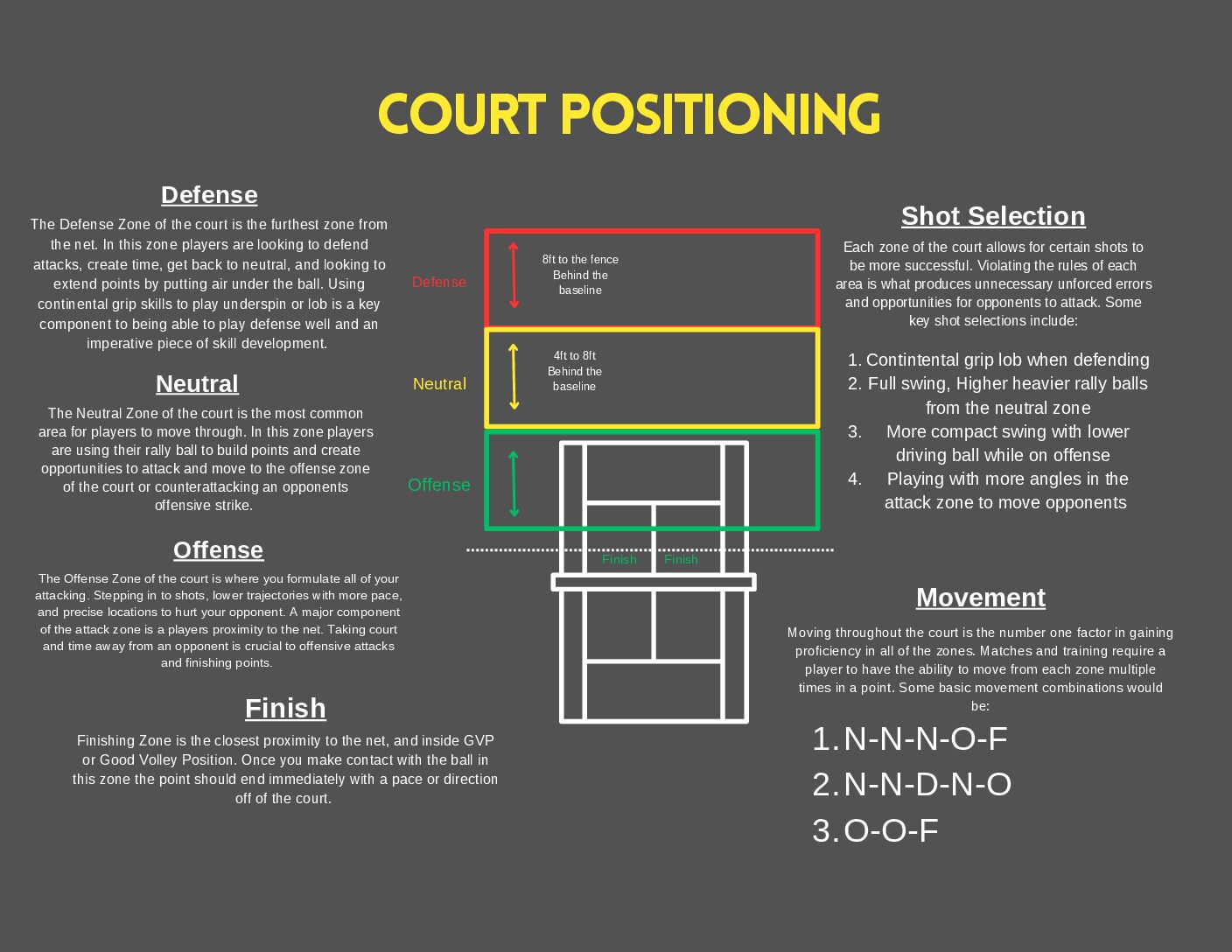
Court Positioning is the most important aspect in relation to strategy and tactics. Knowing where to be and when based on the information an opponent gives you and where the ball lands.
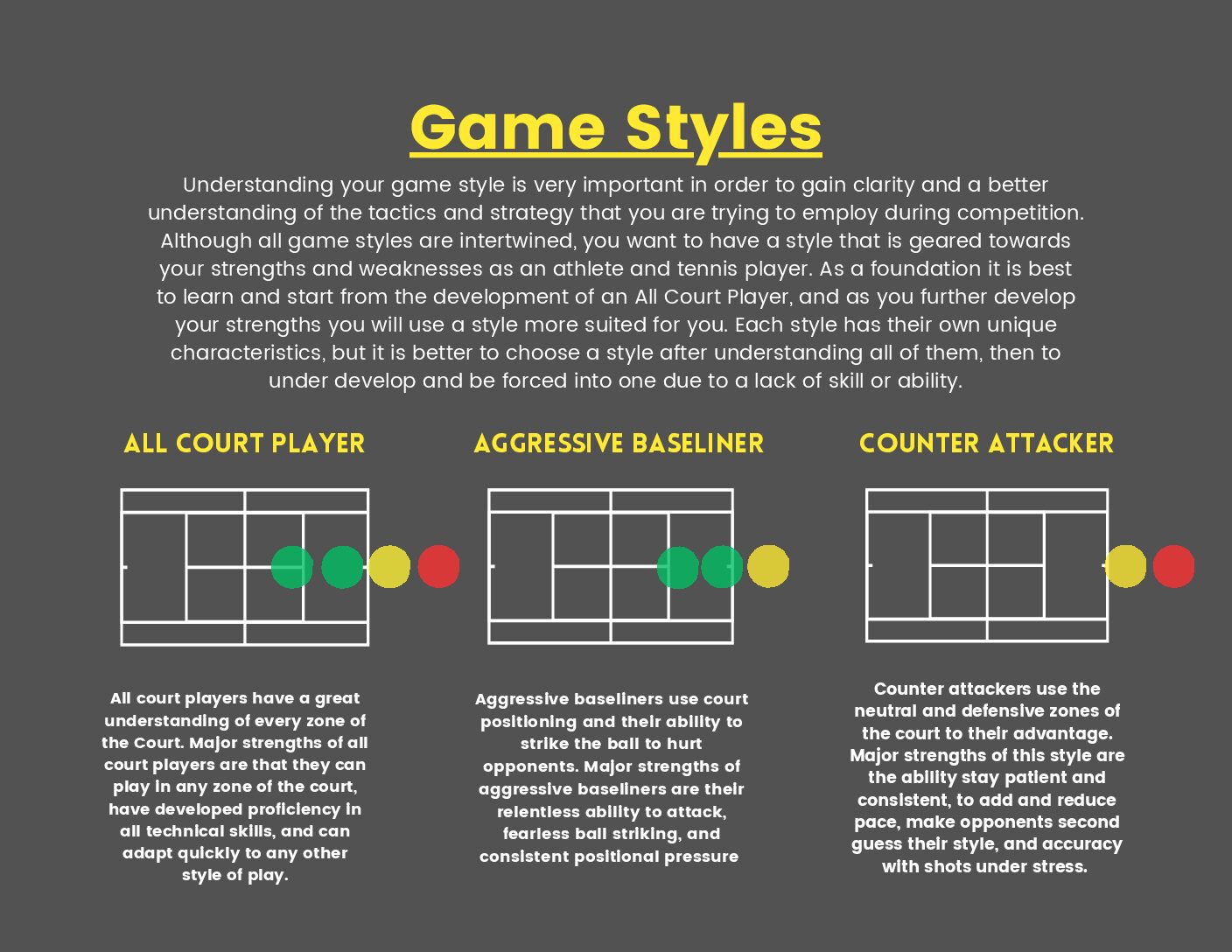
There are a few different styles that people generally fall into. Aggressive Baseliner, All Court Player, and Counter Attacker are among the most popular. Knowing your identity is imperative to growing confidence and proficiency. Just like any other skill, the more you repeat something the smoother and easier it will become.
Successfully utilizing an opponent’s weaknesses can make all the difference in a competitive match. Whether it’s a strategic play or a well-timed move, understanding how to exploit those weaknesses is a skill in itself. Maximizing your strengths, and using them as much as possible is at the foundation of strategy and tactical play.
Problem solving requires self-regulation and self-awareness as well as the ability to evolve and go with the flow of the match. Matches change, variables come into play, and conditions vary. As a competitor you need to have the ability, and know how, to figure out how to manage these conditions.
Understanding Court Positioning Zones
Offense
The Offense Zone is where you attack from and easily recognized as the zone inside the baseline and up into the court. Strong offensive capability and presence is very important. Using your perception and anticipation skills to recognize when you have successfully hurt your opponent in order to capitalize on the opportunities you have created is at the height of tennis strategy. All players make mistakes, and we often confuse playing offense with taking risks. Calculated risks, however, are a part of tennis and when you play from the zones correctly you reduce the amount of errors you make. A major error that is often overlooked in junior tennis is hitting the ball short. If a less experienced player hits the ball short to a more experienced player, they will feel the positional pressure. Spend early developmental years on taking balls out of the air, taking balls on the rise, and attacking any short ball that occurs so that you are more instinctive in this area.
Neutral
The Neutral Zone of the court is where the foundation of your game is established. It requires a patient and attentive mentality, constantly scanning for opportunities to attack. A certain fluidity is required in navigating the Neutral Zone – play defense, return to neutral, move to the offensive zone, and then back to neutral again – all within a single point. Having patience and making smart shot selections are essential for players who truly understand this zone. Rushing shots and trying to force plays often lead to mistakes and should be avoided. Embracing the Neutral Zone is crucial for a well-rounded game and success on the court. Players who truly understand the Neutral Zone are able to anticipate their opponents’ moves and make smart decisions about when to take shots and when to move back to a neutral position. This understanding also helps players avoid careless mistakes that can cost them points and ultimately, games, and matches. Embracing the Neutral Zone is a cornerstone of a well-rounded game and is a key component of success on the court.
Defense
The Defense Zone is the furthest zone from the net, and is meant to give yourself ample time and a chance to get back to the Neutral Zone. Often times, you will see very athletic players who are able to cover a lot of ground on the court and turn defensive moments of a match into successful points. One crucial aspect of this zone is having a strong understanding of continental grip skills and being able to accurately execute high lobs. This requires a combination of physical ability and mental strategy, as players must constantly think ahead and anticipate their opponent’s moves. It is important to emphasize the importance of defensive skills to players, because so many fall in love with hitting winning shots, versus making your opponent miss. Setting yourself up for success and creating opportunities for your opponent to make mistakes by mastering the Defense Zone, will enhance your overall performance on the court.
Attention! Better players do not make positional errors! Know where you are, know the shots that are available, and manage your shot selection! If you reduce positional errors you win more. Period! Understanding this is a key to you learning to not lose to yourself. These are a couple very simple basics:
1. Nothing in the net from the defense zone
2. Nothing high over the net from the offense zone.
3. Create call words for each zone:
Defense/Time, Neutral/Solid, Offense/Attack
The following visual represents Court Positioning and what it entails. There is a simplicity and clarity you want to develop when it comes to understanding these concepts. Gamestyles, skill sets, and discipline are determining factors to being proficient in Court Positioning as well.
Many factors go into developing your personal game style, and should be a commitment between you and your coaches. Clarity and understanding go a long way in building confidence. Transversely, having an identity crisis is the route to losing clarity and confidence.